
Digital Transformation of Police Documentation: AI-Assisted FIR Drafting in Indian Policing
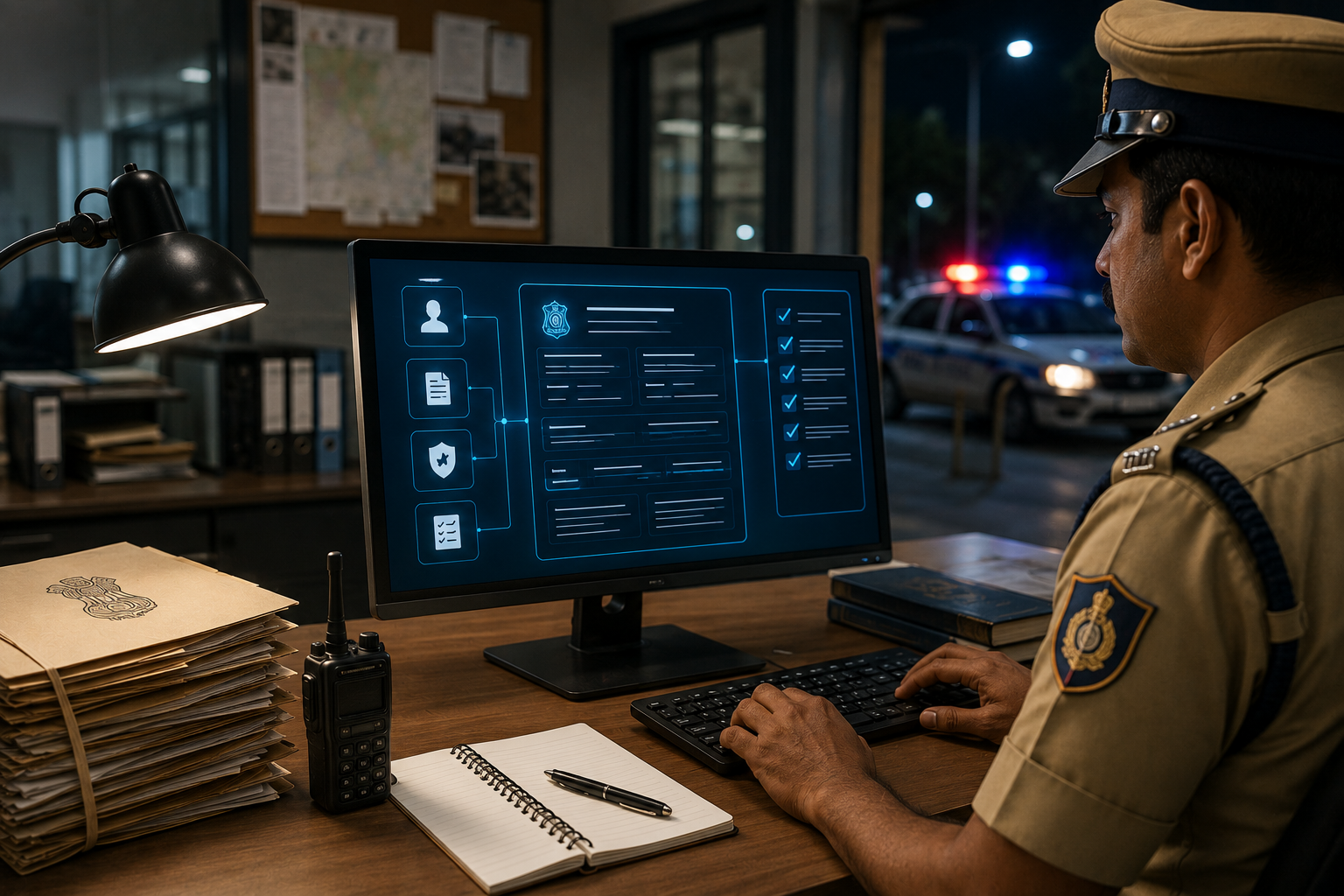
India’s criminal justice system depends on the accuracy of one foundational document: the FIR. AI can help ensure it is complete, legally sound, and consistently documented from the very beginning.
India registers nearly 25 million FIRs every year, yet FIR drafting across many police stations remains a manual, time-intensive process performed under operational pressure and often across multiple regional languages. Documentation gaps, incorrect legal sections, incomplete witness details, and procedural inconsistencies continue to weaken investigations and contribute to acquittals. This white paper from Durwankur AI Lab presents a practical framework for deploying AI-assisted FIR drafting systems to improve documentation quality, reduce drafting errors, and support police officers with faster and more accurate case registration workflows.
The challenge in FIR documentation
The transition from IPC/CrPC to the new BNS/BNSS/BSA legal framework has significantly increased the complexity of FIR drafting. Officers must now correctly map offences to updated legal sections while ensuring procedural compliance and maintaining accurate complainant statements. The paper explains how AI-assisted systems can support officers by automatically identifying applicable legal sections, extracting key information from voice or text inputs, generating structured FIR drafts, and flagging missing mandatory details before registration.
What this white paper covers ?
Common FIR drafting failures in Indian policing
AI-assisted FIR generation workflows
Voice-to-document and multilingual FIR drafting
BNS/BNSS transition support for police departments
Reduction in drafting time and documentation errors
Audit trails and accountability in police documentation
India-hosted AI infrastructure for law enforcement
Recommendations for pilot deployment across states
A practical approach to AI-assisted policing
This paper advocates a human-supervised, governance-first deployment model where AI supports police officers without replacing decision-making authority. The objective is to improve operational efficiency, documentation quality, and institutional accountability while preserving procedural integrity.