
DPDP Act 2023 Compliance for AI in Legal Institutions
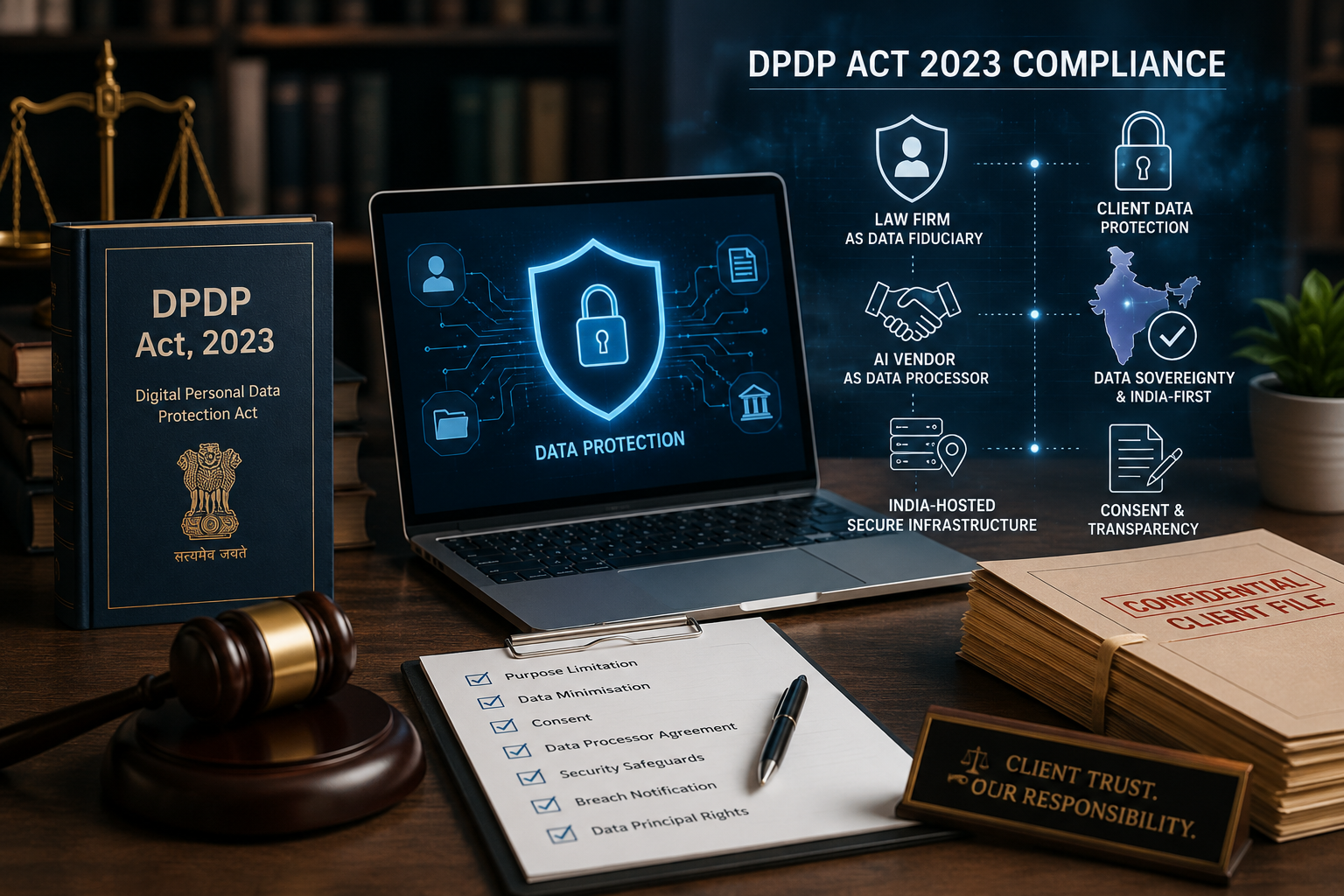
India’s legal industry is entering a new era of data accountability. AI adoption is accelerating but so are compliance obligations under the DPDP Act 2023.
With full enforcement beginning in May 2027, every legal organisation using AI-powered tools for document drafting, case analysis, or legal workflows must ensure compliance with India’s new digital data protection framework.This white paper from Durwankur AI Lab provides a practical, practitioner-focused roadmap for deploying Legal AI responsibly while protecting client confidentiality, managing cross-border data risks, and meeting DPDP Act obligations.
The compliance challenge for Legal AI
Legal professionals routinely handle some of the most sensitive personal data in existence including financial records, criminal histories, medical information, family disputes, and confidential case materials.When AI tools process this information, law firms and legal departments become Data Fiduciaries under the DPDP Act, while AI vendors act as Data Processors. This creates direct legal responsibility for how client data is stored, transferred, secured, and processed.The paper explores why overseas AI platforms may create compliance risks for Indian legal institutions and why India-hosted Legal AI infrastructure is becoming increasingly important.
What this white paper covers
DPDP Act obligations for Legal AI users
Data Fiduciary vs Data Processor responsibilities
Cross-border data transfer risks in AI systems
Compliance checklists for law firms and legal teams
Data Processing Agreements (DPAs) and consent requirements
Breach notification and audit obligations
India-hosted Legal AI infrastructure and governance
Best practices for secure AI deployment in legal institutions
A practical guide for legal organisations
Designed for managing partners, compliance officers, CLOs, legal operations teams, and Legal AI vendors, this paper offers actionable recommendations to help organisations prepare for full DPDP enforcement before 2027.